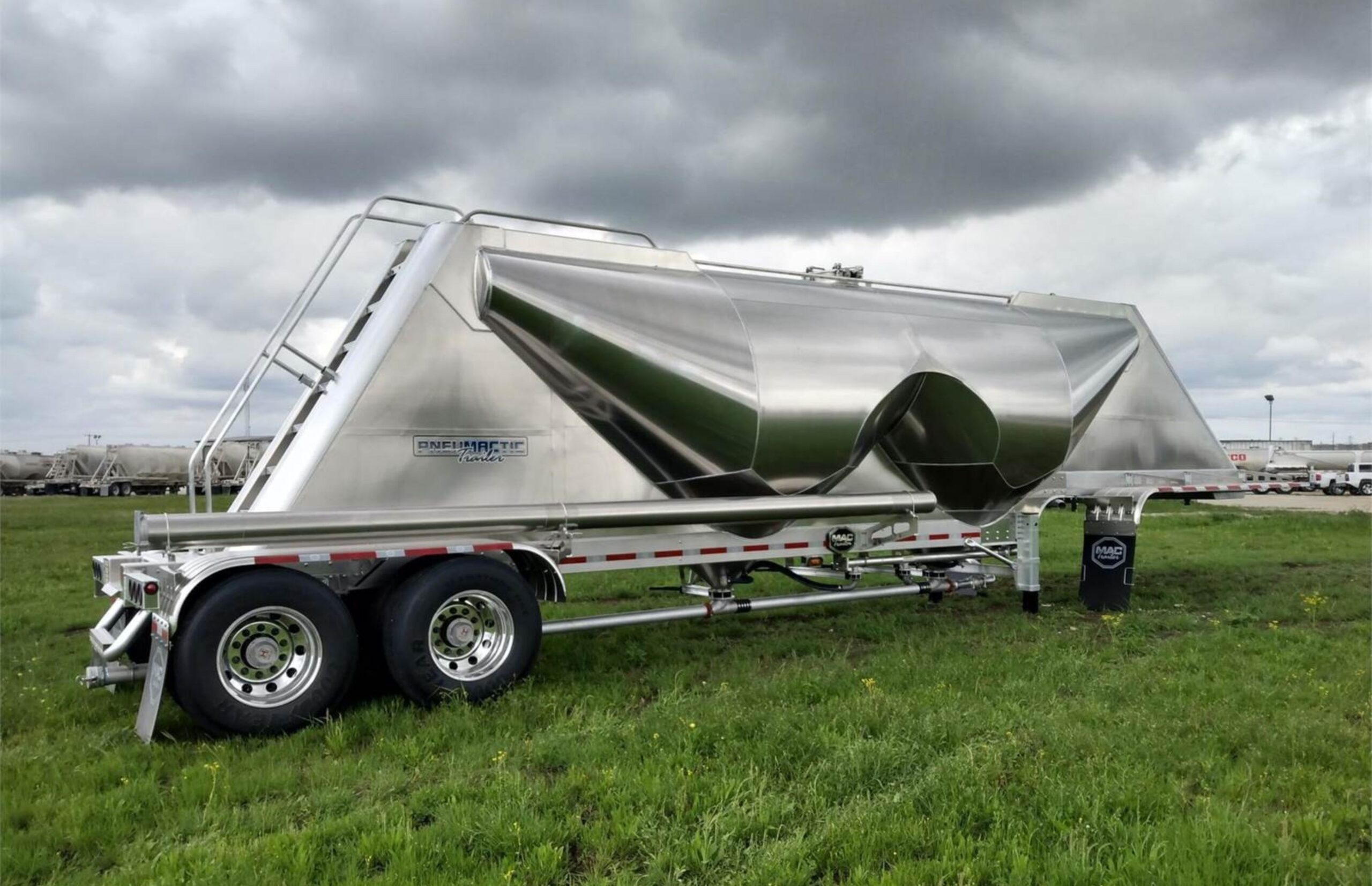
Anyone who’s been around bulk materials long enough eventually figures out that product cleanliness isn’t just a “food-grade” concern. It affects industrial materials, construction mixes, chemical powders, you name it. The more sensitive the product, the more you notice the difference between good equipment and equipment that barely gets the job done.
That’s why pneumatic trailers have taken over so much of the dry bulk work across Alberta and BC. They’re not new, but the way they solve everyday problems is the reason companies keep switching to them. And with how unpredictable the climate is between Vancouver, Edmonton, and Calgary, you start to appreciate equipment that doesn’t give you extra headaches.
A Sealed System Takes Half the Worry Away
If you’ve ever dealt with loads getting ruined from a bit of moisture or dust drifting in, you know how fast things can go downhill. Once contamination hits, you can’t fix it — you’re unloading the whole thing and starting again.
Pneumatic trailers keep everything sealed from the moment loading starts. No open hatches. No unexpected airflow. No chance of debris floating in. It’s just a cleaner system by design.
For food-grade work, it’s basically essential.
For industrial work, it’s just smart.
Moisture Is One of the Biggest Threats — Especially in BC
Anyone who ships through Vancouver knows moisture is everywhere. It doesn’t have to be raining. It doesn’t even have to look humid. The air just carries dampness, and some materials react instantly.
Pneumatic systems solve this because you’re not scooping, dumping, or exposing anything to the elements. The product goes in sealed, stays sealed, and gets unloaded sealed. You don’t have to fight the coastal weather.
And when the loads head inland toward Alberta, the pressure system keeps everything stable while you move through changing conditions.
Less Handling Means Fewer Mistakes
Traditional setups involve more manual work — more openings, more touching valves, more moments where something can go wrong. Pneumatic trailers cut most of that out.
You load straight into the tank, lock everything up, then use air to unload at the other end.
No shoveling.
No open-air exposure.
No “just a quick sweep” that ends up missing leftover product.
A cleaner process always leads to cleaner results.
Food-Grade Clients Notice the Difference Immediately
Food processors in Calgary and Edmonton are strict for a reason. If even a tiny amount of old product gets into a fresh batch of ingredients, the whole production run can be compromised. Pneumatic trailers help eliminate that risk because there are fewer surfaces for product to cling to and fewer ways for dust to drift.
When the trailer is cleaned out properly, it’s clean.
No guessing.
No hidden pockets of material.
No odd smell from last week’s load.
That kind of consistency is exactly what food-grade shippers want.
Air Unloading Reduces Contamination from Equipment
Because pneumatic trailers don’t rely on gravity alone, you get a much cleaner unload. Air pressure moves everything out more efficiently, which means less product left behind. And when less product sticks to the trailer, you get cleaner tanks after washouts too.
It’s a chain reaction.
Cleaner unload → cleaner tank → cleaner next load.
This is the kind of simple engineering that solves a lot of day-to-day frustrations in bulk work.
Drivers Prefer Pneumatic for a Reason
Ask any driver who’s hauled both styles of bulk trailers and they’ll tell you pneumatic is easier to keep clean and easier to manage. Less exposure, fewer moving parts during loading, and fewer opportunities for a problem to pop up midway through the trip.
A clean system doesn’t just protect the load — it makes the driver’s life easier too.
Final Thoughts
Across Vancouver, Calgary, and Edmonton, pneumatic trailers are becoming the default because they remove so many of the issues that used to cause headaches: moisture, contamination, uneven unloading, product loss, you name it.
They’re not perfect, and they need proper cleaning and maintenance like anything else, but the difference in product quality is noticeable. If you’re hauling something that needs to stay clean — or even just something that reacts badly to moisture — pneumatic is the simplest and most reliable choice.
Leave a Reply