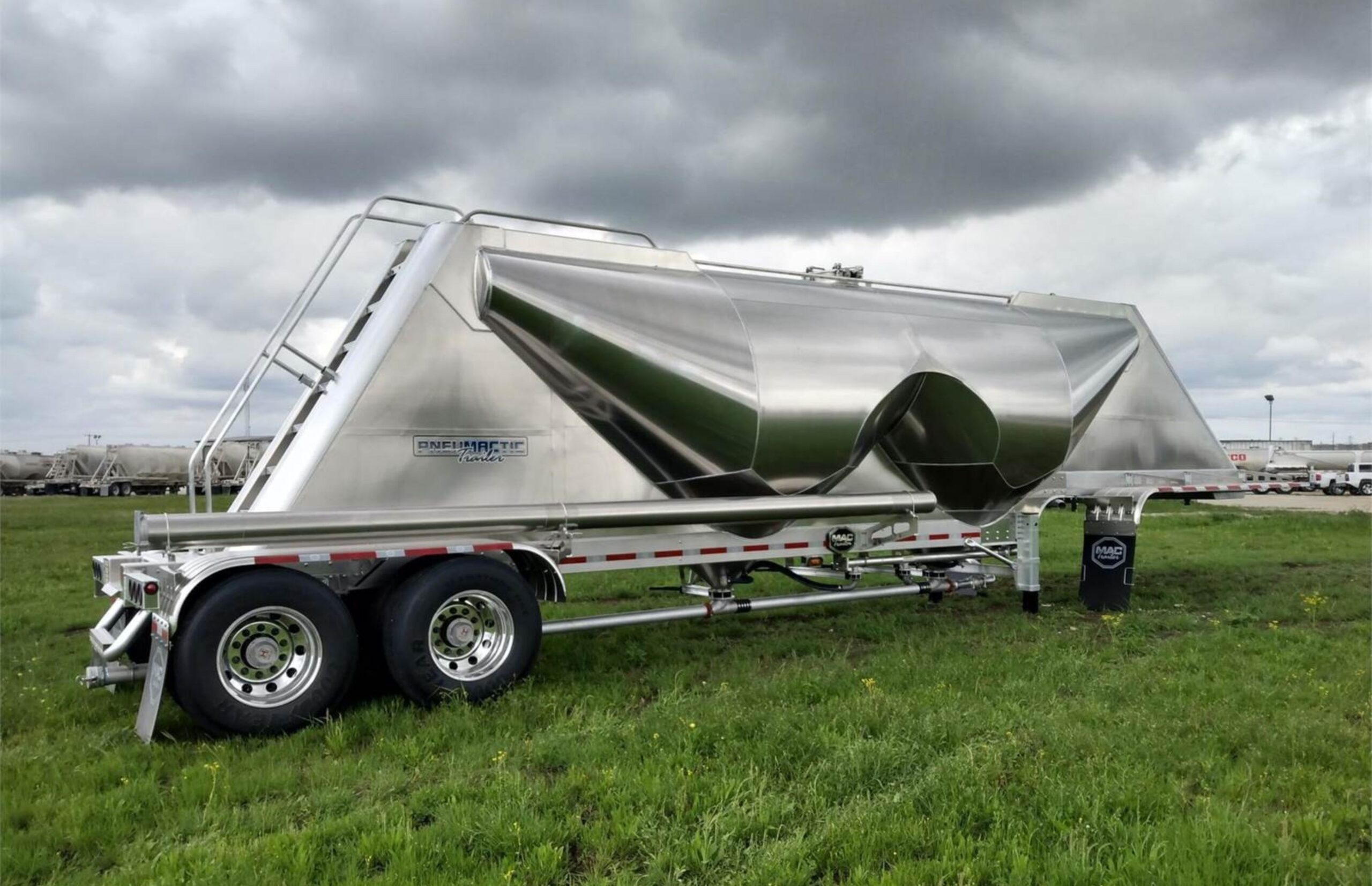
At some point, almost every company that deals with dry bulk ends up asking the same question: Do we stick with hopper trailers, or do we switch to pneumatic?
If you’ve been around this industry for a while, you already know the answer isn’t as simple as “one is better.” Both have their place, but they’re built for different jobs. And in Alberta — with the weather, the product types, and the long hauling distances — the differences show up fast.
Shippers in Calgary, Edmonton, and even Vancouver run into this decision more often as more products start requiring cleaner, sealed transport. Here’s a straight, no-nonsense breakdown of how each trailer actually behaves in real work conditions.
Hopper Trailers: Simpler, but Not Always Cleaner
Hopper trailers are the old standby.
They’re straightforward, gravity does most of the work, and unloading is usually quick — as long as the product flows well.
Hoppers work best for:
• Grains
• Pellets
• Coarse materials
• Products that aren’t moisture-sensitive
But here’s the part people don’t mention enough:
Hoppers expose product to the air during loading and unloading.
On dry days in central Alberta, that’s not a big problem.
On a wet Vancouver morning, it becomes a serious issue.
If the material absorbs moisture, clumps, or reacts to humidity, a hopper can turn a clean load into a messy one.
Pneumatic Trailers: Cleaner, More Controlled, and Better for Sensitive Products
Pneumatic tanks are built for materials that can’t afford contamination or moisture. They load sealed, they unload sealed, and you can control the product with airflow.
Pneumatic is ideal for:
• Food-grade powders
• Cement
• Lime
• High-purity ingredients
• Fine chemicals
• Anything moisture-sensitive
They’re a bit more complicated to run, but the tradeoff is a cleaner system with far fewer surprises.
Plus, in Alberta winters, the sealed environment makes a massive difference.
Unloading Difference: Gravity vs. Airflow
This is where most of the practical differences show up.
Hoppers:
• Fast unloads if the product flows well
• Slow unloads if the product bridges
• More left behind in corners or pockets
• More cleanup afterward
Pneumatics:
• Controlled unloading
• Uses pressure instead of relying on gravity
• Cleaner tank after unload
• Less leftover material attached to the walls
If you’re unloading into a pressurized system — which many food processors in Calgary and Edmonton use — pneumatic isn’t just “nice to have.” It’s required.
Maintenance and Cleaning Are Very Different
Hopper cleanouts are… let’s call them “honest.” You sweep, you brush, you wash, and you hope moisture doesn’t sneak in.
Pneumatic cleanouts are more involved, but they give better results.
When you clean a pneumatic trailer properly, it’s truly clean.
No open-air dust, no debris blowing around the yard, no guessing whether the tank is dry.
Food-grade companies prefer pneumatic because they trust the cleaning process more.
Weather Hits Hoppers Harder
Alberta isn’t gentle with equipment. Neither is BC.
Hoppers struggle with:
• Moisture
• Freeze–thaw cycles
• Dust contamination
• Wet unloading conditions
Pneumatics handle weather better because everything stays sealed until the job is done.
That’s why more companies shipping from Vancouver to Calgary choose pneumatic — the humidity on the coast causes too many issues with hoppers.
Cost Isn’t as Simple as People Think
Hoppers are cheaper to buy.
Pneumatics are more expensive to maintain.
But here’s what shippers often forget:
If one contaminated load gets rejected, the savings you made using a hopper disappear instantly.
This is why more food-grade, chemical, and high-sensitivity industries are making the switch even if the upfront cost is higher.
Which Should You Choose?
Here’s the simplest way to think about it:
Choose hopper if your product:
• Doesn’t react to moisture
• Doesn’t need sealed transport
• Flows easily
• Isn’t going to a sensitive facility
Choose pneumatic if your product:
• Needs to stay dry
• Requires cleanliness
• Goes to a food or chemical plant
• Is expensive or sensitive
• Doesn’t flow well under gravity
Most companies in Alberta now run both — hoppers for the easy stuff, pneumatics for everything else.
Final Thoughts
Hoppers still have their place, and they’re not going anywhere. But as products get more sensitive and customers get stricter, pneumatic trailers are becoming the go-to choice for anything that needs protection from the environment.
If you’re shipping across Calgary, Edmonton, or Vancouver — especially during bad weather — pneumatic simply gives you fewer headaches.
Leave a Reply