Author: admin@

  • How Bulk Haulers Keep Product Quality Intact From Vancouver to Edmonton

    How Bulk Haulers Keep Product Quality Intact From Vancouver to Edmonton

    Moving bulk materials across short distances is one thing. Moving them from Vancouver all the way to Edmonton — through changing weather, mountain passes, humidity shifts, and long hours — is something entirely different. The product doesn’t just sit there quietly for 1,100 kilometres. It settles, it shifts, and sometimes it reacts to whatever’s happening outside the tank.

    Companies that don’t haul often underestimate how much the road affects the product. But the haulers who run the Vancouver–Edmonton lane every week know exactly what can go wrong, and they’ve built routines to keep the material in good shape from start to finish.

    Here’s what really protects product quality on a long haul between the coast and Alberta.

    Start With a Dry, Properly Cleaned Tank

    The first few minutes of loading set the tone for the entire trip.
    If the tank isn’t completely dry before you start, humidity from Vancouver will cling to the interior walls. That moisture travels with the load all the way to Edmonton and shows up as clumping or slow unloading later.

    Experienced haulers always confirm:
    • The tank is bone dry
    • Valves and fittings aren’t holding condensation
    • There’s no leftover dust
    • Seals are set properly

    In food-grade especially, the tank has to be absolutely clean — no shortcuts.

    Load Quickly and Seal Immediately

    Vancouver’s air is humid even on a “dry” day.
    The longer the tank stays open, the more moisture the product absorbs.
    Haulers who know the coast don’t waste time once the hatch opens.

    They:
    • Load steadily
    • Close the system immediately
    • Check seals before leaving the yard

    That short window between opening and sealing matters more than most people realize.

    Account for Mountain Pressure Changes

    The Rockies can mess with product behavior.
    As the truck climbs, pressure changes inside the tank can cause material to shift, compress, or settle differently.

    Drivers who run this route regularly stay ahead of it by:
    • Keeping airflow balanced
    • Monitoring tank pressure
    • Making small adjustments during breaks
    • Planning stops at safe spots, not random shoulders

    It sounds small, but it makes unloading in Edmonton much smoother.

    Protect the Load From Temperature Swings

    On the Vancouver–Edmonton route, the temperature can jump 20 degrees in a few hours.

    Leaving the coast: mild
    Through the mountains: cold
    Into Alberta: sometimes freezing

    Certain powders tighten up in the cold and need more air to move. Others react badly to heat when you hit the Fraser Valley on a warm day.

    Professional haulers know how each product behaves and prep for the right conditions.

    Avoid Stops That Expose the Load to Moisture

    Stopping in the wrong place can introduce moisture even if the trailer stays sealed.

    Fog in Rogers Pass
    Damp early mornings in Chilliwack
    Cold–warm transitions in Kamloops
    Snow blowing into fittings in Kicking Horse

    Drivers who understand the route avoid opening anything unless absolutely necessary.
    No airing out valves.
    No unnecessary checks.
    No “quick fix” that breaks the seal.

    Moisture is always the enemy.

    Plan Arrival Times to Match Edmonton Unloading Windows

    Even if the product arrives in perfect condition, unloading can still go badly if the timing is off.

    Receivers in Edmonton may:
    • Only unload during certain hours
    • Require a warm bay
    • Have limited access in winter
    • Run slower during shift changes

    A long haul means timing matters.
    Experienced haulers aim to arrive when the plant is ready — not during their busiest moments.

    Adjust Airflow Before Starting the Unload

    Good drivers don’t just hook up hoses and hope for the best.
    They test airflow, warm up the system if it’s cold, and start slowly so the product wakes up evenly.

    The smoother the start, the smoother the entire unload.

    Final Thoughts

    Product quality doesn’t survive a Vancouver–Edmonton haul by accident.
    It survives because the hauler understands humidity, weather, pressure changes, and the way the product behaves over long distances.

    If your carrier treats the trip like a simple A-to-B run, expect problems on the other end.
    If they treat it like a controlled process — from loading to unloading — your product arrives exactly the way it should.
  • Bulk Hauling Safety Standards Every Alberta Business Should Actually Pay Attention To

    Bulk Hauling Safety Standards Every Alberta Business Should Actually Pay Attention To

    Safety in bulk hauling isn’t a fancy slogan or a binder full of rules that nobody reads. It’s the quiet set of habits that keep loads intact, drivers protected, and customers confident that their product is handled properly. Most of the real safety work happens long before a truck ever hits the highway.

    If you’re shipping dry bulk in Calgary, Edmonton, or even through the Vancouver corridor, there are a few safety standards that matter way more than the rest. These are the ones that actually affect the product and the schedule — not the corporate poster version, but the reality drivers and operations teams deal with every day.

    1. Clean, Dry Equipment Isn’t Optional — It’s the First Line of Safety

    A clean tank isn’t just about product purity. It’s a safety issue too.
    Leftover residue can:
    • Block airflow
    • Cause pressure surges
    • Trigger bridging
    • Slow unloading
    • Damage valves

    Moisture makes this even worse, especially in Edmonton’s freeze–thaw cycles or Vancouver’s humidity.

    Safety starts with preparation.
    If the trailer isn’t ready before loading, you can’t expect the trip or unload to go smoothly.

    2. Air Systems Need to Be Monitored Constantly

    On a pneumatic trailer, pressure is everything.
    Drivers check it during:
    • Loading
    • Transit
    • Every stop
    • Unloading

    Why? Because a slight change in airflow can tell you something’s wrong long before you see a visible issue.

    A good hauler knows how to spot:
    • Stiff product
    • Overpressure
    • Valve obstructions
    • Leaks in the system

    Pressure problems become safety problems fast, especially with fine powders.

    3. Weight and Axle Compliance Keeps Everyone Out of Trouble

    Some shippers assume “close enough” is fine when it comes to weights.
    It isn’t.
    One overweight axle can get a truck pulled off the road, or worse, cause unsafe handling in bad weather.

    BC is strict.
    Alberta is strict during seasonal bans.
    Saskatchewan has its own rules.

    If your hauler doesn’t know how weight shifts inside a tank, especially after partial unloads, you’ll run into trouble.

    Experienced drivers load with weight distribution in mind — not just volume.

    4. Weather Awareness Isn’t Just About Driving Conditions

    Weather affects the product too.
    Snow, humidity, and temperature swings affect:
    • How the product settles
    • How fast it unloads
    • Whether condensation forms
    • Whether valves freeze

    Drivers who understand this don’t rush loading or unloading during extreme conditions.
    They adjust airflow, dry fittings, and take the time needed to keep the load stable.

    Rushing in bad weather causes more problems than it solves.

    5. Proper PPE and Safe Loading Procedures Protect Drivers

    Most loading sites in Calgary and Edmonton have safety rules, but not all of them enforce them well.
    Experienced haulers don’t take chances.

    They use:
    • Eye protection during loading
    • Gloves for handling hoses
    • Proper footwear in icy yards
    • Respiratory protection when required

    Powders can irritate the lungs.
    Frozen yards cause slips.
    Hoses whip if depressurized wrong.

    Simple habits prevent injuries.

    6. Site-Specific Safety Rules Matter More Than People Think

    Every facility has its own quirks.
    Some want drivers to stay in the cab.
    Some want drivers to assist with loading.
    Some require locks, grounding cables, or special valves.

    Ignoring these doesn’t just cause delays — it can get the driver banned from the site.

    Drivers who respect site rules keep the relationship smooth and avoid surprises.

    7. Secure Unloading Areas Prevent Accidents

    You’d be shocked how many issues come from poor unload site prep.
    Uneven ground
    Soft soil
    Ice patches
    Low clearance
    Bad hose angles

    If the area isn’t safe, unloading becomes unpredictable. Drivers who take five minutes to reposition or adjust the setup prevent problems that would take hours to fix later.

    8. Communication Is One of the Most Overlooked Safety Tools

    Most safety incidents in bulk transport happen because someone assumed something.
    The loader assumed the tank was empty.
    The driver assumed the customer was ready.
    Dispatch assumed the weather was fine.

    A quick phone call prevents most issues before they start.

    Good carriers communicate constantly.
    Bad ones only call when something’s already gone wrong.

    Final Thoughts

    Bulk hauling safety isn’t complicated — it’s about discipline.
    Clean equipment, solid weight checks, good airflow management, and respect for weather and site rules. These things keep the driver safe and the product protected.

    If your carrier treats safety like a checklist, be careful.
    If they treat it like part of their culture, you’re in good hands.

  • Industries That Rely Most on Pneumatic Dry Bulk Hauling in Western Canada

    Industries That Rely Most on Pneumatic Dry Bulk Hauling in Western Canada

    If you asked someone outside the industry who uses pneumatic bulk hauling, most people would guess food companies and maybe a couple of construction outfits. But once you’ve been around bulk work, you realize pneumatic trailers touch way more industries than people expect. Pretty much anything that pours, flows, or needs to stay clean ends up in one of these tanks sooner or later.

    The Alberta–BC corridor has a mix of old-school industries and new ones popping up, and all of them have their own reasons for using pneumatic systems. Some need cleanliness, some need moisture protection, and some just want speed.

    Here’s a breakdown of the sectors that rely on pneumatic dry bulk hauling the most — not the textbook answer, but what you see in real operations across Calgary, Edmonton, and Vancouver.

    1. Food and Ingredient Manufacturers

    If there’s one industry that uses pneumatic more than anyone else, it’s food-grade processing.
    Edmonton and Calgary both have a huge ingredient network — bakeries, supplement makers, processors, packaging plants, specialty ingredient suppliers, the whole range.

    These places want:
    • Zero contamination
    • Sealed transport
    • Clean trailers
    • Fast unloading
    • Documentation for every load

    Food-grade materials react badly to moisture, dust, and cross-contact with other products. Pneumatic systems basically remove those risks.

    2. Industrial Powders and Chemicals

    A lot of industrial materials look harmless until you see how they behave when exposed to air or moisture. Cement, lime, bentonite, fly ash, plastic pellets — they all have quirks that make pneumatic systems the safest way to haul them.

    This sector uses pneumatics because:
    • The materials clump easily
    • They require uniform unloads
    • Dust control is important
    • Moisture causes major problems

    These loads aren’t about “food-safe” standards. They’re about protecting the chemical makeup of the product.

    3. Agriculture and Feed

    People forget how many agricultural materials move around Western Canada in bulk form. The farms around Calgary, Red Deer, and central Alberta use everything from grain powders to feed additives to soil amendments. Some of these products need precise handling.

    Pneumatic trailers help because:
    • They prevent moisture damage
    • They protect powders from wind
    • They unload cleanly and evenly
    • They reduce contamination from previous loads

    For big farms, time and consistency matter more than anything else — pneumatics help with both.

    4. Construction and Cement Products

    The construction world is basically built on bulk materials. Cement, fly ash, silica sand, and dry mixes all move better in sealed systems. When these materials clump, absorb moisture, or get contaminated, the entire construction batch can be ruined.

    Pneumatic is used here because it:
    • Handles heavy, dense materials cleanly
    • Prevents water exposure
    • Keeps dust under control
    • Unloads quickly at high-volume sites

    If you’ve ever seen a cement crew sitting around waiting for a load, you understand why timing matters.

    5. Plastics and Manufacturing

    Pellets, resins, fine plastics — these materials are sensitive to contamination and need to remain dry at all times. Vancouver especially has a lot of manufacturing materials moving inland to Alberta.

    Plastics don’t forgive mistakes. A little dust, moisture, or debris can compromise an entire run. Pneumatic loading keeps everything contained from start to finish.

    6. Energy Sector and Chemical Injection Materials

    Northern Alberta uses a surprising amount of powdered products for drilling, mixing, and specialty injection systems. These are high-value loads, and contamination ruins them immediately.

    Companies choose pneumatic here because:
    • It’s safer
    • It’s cleaner
    • It handles sensitive powders well
    • It reduces product waste during unload

    A lot of these materials are expensive, so controlled unloading matters.

    7. Specialty and High-Purity Products

    There’s a growing category of materials that fall under “high-purity” — supplements, nutraceutical powders, pharmaceutical ingredients, and other sensitive materials.

    These loads require the cleanest equipment and the most consistent unloading. Pneumatic trailers give shippers confidence that there won’t be leftover dust, moisture, or remnants from the previous run.

    Final Thoughts

    The beauty of pneumatic dry bulk hauling is that it’s versatile. Whether you’re moving food ingredients, industrial chemicals, plastics, or agricultural powders, the equipment solves problems before they happen.

    Western Canada — especially around Calgary, Edmonton, and Vancouver — has enough industries with sensitive materials that pneumatic systems aren’t just a “nice upgrade.” They’re becoming the standard.

    If the product can’t afford contamination, can’t get wet, or needs a clean, controlled unload, pneumatic is usually the right call. And that’s why so many companies across so many sectors rely on it — it just does the job better.

  • Pneumatic vs. Hopper Trailers — What Alberta Shippers Should Know Before Choosing

    Pneumatic vs. Hopper Trailers — What Alberta Shippers Should Know Before Choosing

    At some point, almost every company that deals with dry bulk ends up asking the same question: Do we stick with hopper trailers, or do we switch to pneumatic?
    If you’ve been around this industry for a while, you already know the answer isn’t as simple as “one is better.” Both have their place, but they’re built for different jobs. And in Alberta — with the weather, the product types, and the long hauling distances — the differences show up fast.

    Shippers in Calgary, Edmonton, and even Vancouver run into this decision more often as more products start requiring cleaner, sealed transport. Here’s a straight, no-nonsense breakdown of how each trailer actually behaves in real work conditions.

    Hopper Trailers: Simpler, but Not Always Cleaner

    Hopper trailers are the old standby.
    They’re straightforward, gravity does most of the work, and unloading is usually quick — as long as the product flows well.

    Hoppers work best for:
    • Grains
    • Pellets
    • Coarse materials
    • Products that aren’t moisture-sensitive

    But here’s the part people don’t mention enough:

    Hoppers expose product to the air during loading and unloading.
    On dry days in central Alberta, that’s not a big problem.
    On a wet Vancouver morning, it becomes a serious issue.

    If the material absorbs moisture, clumps, or reacts to humidity, a hopper can turn a clean load into a messy one.

    Pneumatic Trailers: Cleaner, More Controlled, and Better for Sensitive Products

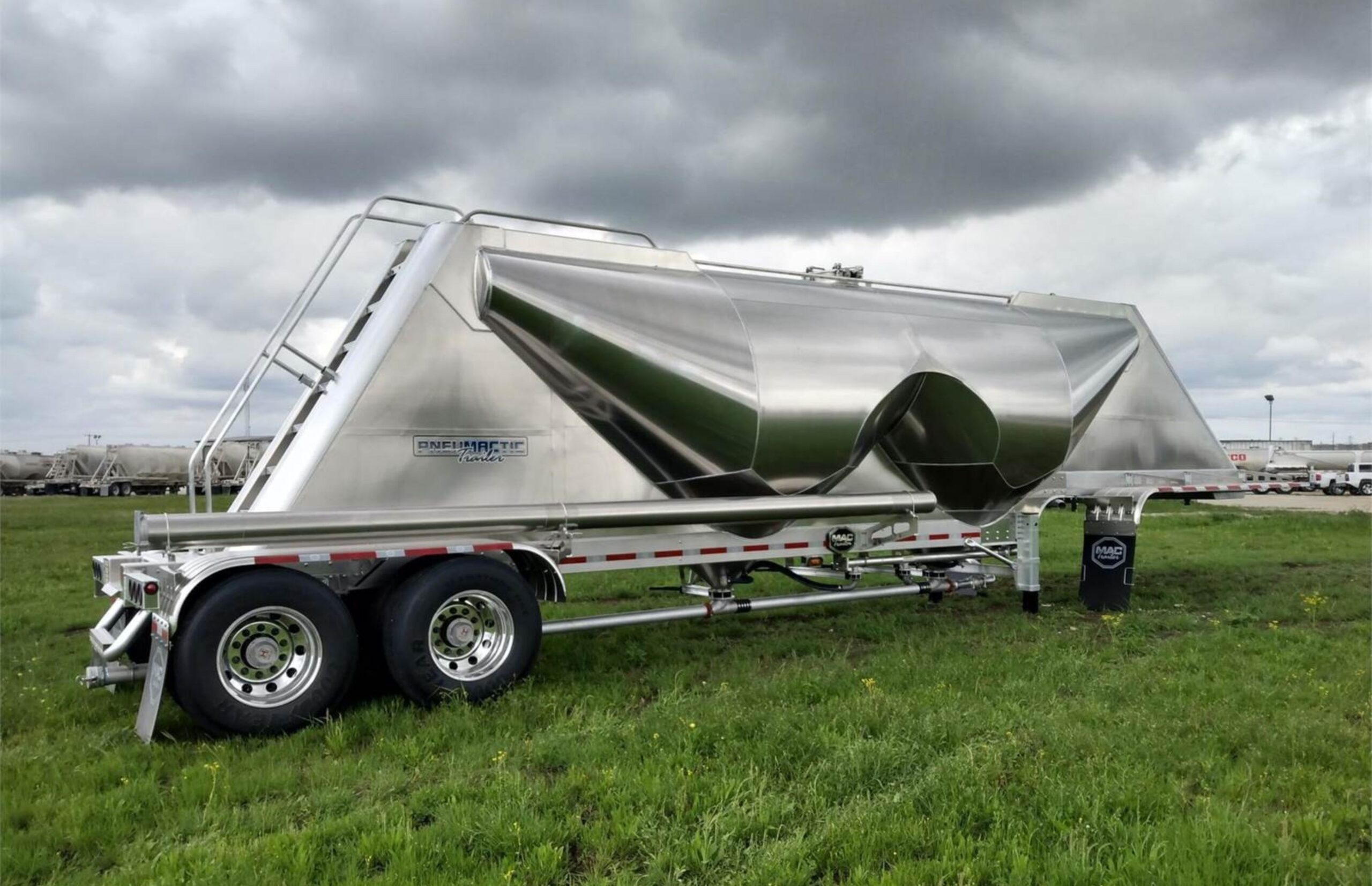
    Pneumatic tanks are built for materials that can’t afford contamination or moisture. They load sealed, they unload sealed, and you can control the product with airflow.

    Pneumatic is ideal for:
    • Food-grade powders
    • Cement
    • Lime
    • High-purity ingredients
    • Fine chemicals
    • Anything moisture-sensitive

    They’re a bit more complicated to run, but the tradeoff is a cleaner system with far fewer surprises.
    Plus, in Alberta winters, the sealed environment makes a massive difference.

    Unloading Difference: Gravity vs. Airflow

    This is where most of the practical differences show up.

    Hoppers:
    • Fast unloads if the product flows well
    • Slow unloads if the product bridges
    • More left behind in corners or pockets
    • More cleanup afterward

    Pneumatics:
    • Controlled unloading
    • Uses pressure instead of relying on gravity
    • Cleaner tank after unload
    • Less leftover material attached to the walls

    If you’re unloading into a pressurized system — which many food processors in Calgary and Edmonton use — pneumatic isn’t just “nice to have.” It’s required.

    Maintenance and Cleaning Are Very Different

    Hopper cleanouts are… let’s call them “honest.” You sweep, you brush, you wash, and you hope moisture doesn’t sneak in.

    Pneumatic cleanouts are more involved, but they give better results.
    When you clean a pneumatic trailer properly, it’s truly clean.
    No open-air dust, no debris blowing around the yard, no guessing whether the tank is dry.

    Food-grade companies prefer pneumatic because they trust the cleaning process more.

    Weather Hits Hoppers Harder

    Alberta isn’t gentle with equipment. Neither is BC.

    Hoppers struggle with:
    • Moisture
    • Freeze–thaw cycles
    • Dust contamination
    • Wet unloading conditions

    Pneumatics handle weather better because everything stays sealed until the job is done.

    That’s why more companies shipping from Vancouver to Calgary choose pneumatic — the humidity on the coast causes too many issues with hoppers.

    Cost Isn’t as Simple as People Think

    Hoppers are cheaper to buy.
    Pneumatics are more expensive to maintain.

    But here’s what shippers often forget:

    If one contaminated load gets rejected, the savings you made using a hopper disappear instantly.

    This is why more food-grade, chemical, and high-sensitivity industries are making the switch even if the upfront cost is higher.

    Which Should You Choose?

    Here’s the simplest way to think about it:

    Choose hopper if your product:
    • Doesn’t react to moisture
    • Doesn’t need sealed transport
    • Flows easily
    • Isn’t going to a sensitive facility

    Choose pneumatic if your product:
    • Needs to stay dry
    • Requires cleanliness
    • Goes to a food or chemical plant
    • Is expensive or sensitive
    • Doesn’t flow well under gravity

    Most companies in Alberta now run both — hoppers for the easy stuff, pneumatics for everything else.

    Final Thoughts

    Hoppers still have their place, and they’re not going anywhere. But as products get more sensitive and customers get stricter, pneumatic trailers are becoming the go-to choice for anything that needs protection from the environment.

    If you’re shipping across Calgary, Edmonton, or Vancouver — especially during bad weather — pneumatic simply gives you fewer headaches.

  • How Weather Impacts Bulk Transport in Edmonton — What Most People Don’t See

    How Weather Impacts Bulk Transport in Edmonton — What Most People Don’t See

    If you’ve hauled anything in or out of Edmonton for long enough, you stop checking the weather app for “good news.” You check it to see what kind of problems you’re going to be dealing with that week. Edmonton has a personality when it comes to weather — cold snaps that hit without warning, warm spells that melt everything, sudden wind, dry days that turn into freezing evenings. None of it stays consistent for very long.

    And when you’re moving dry bulk, especially powders or food-grade ingredients, the weather isn’t just an annoyance. It actually changes how product behaves in the trailer, how fast you can move, and sometimes whether the load is even safe to take at all. People who work behind a desk never see this, but anyone on the ground in Edmonton knows exactly what I’m talking about.

    Cold Weather Slows Down Everything — Equipment, Product, Even Airflow

    When the temperature drops, everything stiffens up. Valves can freeze, seals harden, and air systems take longer to reach steady pressure. Even simple tasks take more effort. Drivers have to double-check things that normally wouldn’t need attention.

    But the bigger issue is the product itself.
    Some powders stiffen when the air gets cold.
    Some need more pressure to move out.
    Some become more abrasive.

    If the load isn’t warmed up or handled right, the unload takes twice as long. Edmonton winters don’t care whether you’re on a schedule.

    Moisture Can Ruin a Load Without Anyone Realizing It

    This one sneaks up on newer shippers. Edmonton might not be Vancouver-level humid, but moisture pops up in ways people forget about:
    • Temperature swings
    • Condensation inside plants
    • Ice buildup melting in hoppers
    • Fog rolling in at dawn
    • Wet equipment from previous loads

    Dry bulk hates moisture — even a small amount. Once it clumps, sticks, or cakes onto the interior, you’re in trouble. That’s why sealed pneumatic systems help so much. They take half the risk off the table right away.

    Wind Affects Loading More Than Transport

    People look at the wind and think, “Well, driving might get rough.” Sure, crosswinds can make a trailer dance a bit, but the bigger issue shows up at the loading site.

    Wind moves dust.
    Wind makes light materials drift.
    Wind affects how smoothly product flows into the tank.

    If you’re loading in an open yard during one of Edmonton’s windy spells, you have to change how you angle the hoses, how fast you load, and sometimes even how close you park to the hopper.

    These aren’t big dramatic adjustments — but they make a huge difference.

    Freeze-Thaw Cycles Throw Off Everyone’s Schedule

    Edmonton has this habit of being warm at noon and frozen solid by supper. When temperatures bounce around like that, roads get messy, yard conditions change, and unloading pads turn slick.

    Loads that should take thirty minutes turn into an hour because:
    • Valves freeze mid-unload
    • Hose connections seize
    • Product flow becomes inconsistent
    • Drivers need extra time to check equipment

    People who don’t work with bulk think delays are random. They’re not. They’re usually tied directly to the weather.

    Plant Conditions Change When Temperatures Drop

    Inside Edmonton processing plants, winter hits differently.
    Warm indoor air meets cold outdoor air.
    Doors open. Moisture forms.
    Cold metal sweats as soon as warm air touches it.

    If you’re not paying attention, you can contaminate a load just by backing into a warm bay after sitting outside in -20.

    The good haulers know this. They wait for temperature equalization, they dry their equipment, and they double-check fittings before loading.

    Summer Isn’t “Easy Mode” Either

    People assume Edmonton summer is perfect for hauling. It’s better, sure, but summer creates its own kind of trouble:
    • Dust storms on rural roads
    • Overheating air systems
    • Soft ground in farm and construction yards
    • Long days causing more pressure on schedules

    Heat affects air pressure differently than cold. Drivers make tiny adjustments that most people never notice — but those adjustments prevent bigger problems down the line.

    Final Thoughts

    Weather affects bulk transport in Edmonton more than people think. It slows down equipment, changes how product moves, affects cleanliness, and sometimes forces you to rethink loading or unloading entirely.

    But the companies that do well in this region all handle it the same way:
    They don’t panic, they don’t cut corners, and they don’t pretend the weather isn’t part of the job.

    They adapt — and the product arrives the way it should.

  • Vancouver Cross-Border Logistics — How to Avoid Delays at the U.S. Border

    Vancouver Cross-Border Logistics — How to Avoid Delays at the U.S. Border

    If there’s one route that keeps people on their toes, it’s anything that starts in Vancouver and heads south. Between the port traffic, the weather, and the constant flow of freight into the U.S., cross-border runs from the coast can feel like a different world compared to runs starting out of Calgary or Edmonton.

    Most companies don’t realize how many moving parts go into a clean border crossing until they’ve had one go wrong. It doesn’t take much — one missing form, one vague commodity description, one unexpected inspection — and suddenly you’re hours behind schedule. When you’re hauling bulk materials, especially anything food-grade or sensitive, those delays aren’t just annoying; they’re expensive.

    Here’s the real, on-the-ground version of what helps Western Canadian shippers avoid headaches at the U.S. border.

    Paperwork Has to Match Exactly — No Guessing, No Rounding Up

    A lot of border issues happen because someone didn’t double-check the basics.
    The commodity code is off by one number.
    The description is too vague.
    The weight doesn’t match what’s printed.

    Customs officers don’t like guesswork, and they shouldn’t — their job is to make sure everything lines up.

    If you’re moving bulk powders, food ingredients, or industrial materials out of Vancouver, make sure the paperwork is:
    • Detailed
    • Accurate
    • Matching the product exactly
    • Signed and verified before the truck rolls

    Drivers appreciate it, too, because nothing feels worse than pulling up to the booth and realizing something’s missing.

    Food-Grade and Dry Bulk Loads Get More Attention

    Border officers don’t treat every load the same. Food-grade materials, powders, chemicals, and anything that could pose a contamination risk get extra eyes.

    That means:
    • Expect more questions
    • Expect possible secondary inspection
    • Expect officers to check for proper documentation

    If the trailer is sealed, clean, and supported by proper logs, crossings usually stay smooth. But if something looks off — even slightly — the load gets held.

    This is why experienced haulers don’t cut corners. They know what officers look for.

    Timing Your Border Arrival Makes a Bigger Difference Than You Think

    People who haven’t done cross-border work assume the border runs on a consistent schedule. It doesn’t. Mornings can be slammed. Late afternoons can be unpredictable. Even weekends can stack up depending on vessel schedules at the port.

    The busiest times usually align with:
    • Port release surges
    • Morning rush
    • Afternoon shift changes
    • U.S. holiday weekends

    A seasoned hauler plans around these.
    Someone inexperienced just shows up whenever — and waits.

    Weather Can Slow You Down Long Before You Reach the Border

    This is the part most shippers overlook.

    Vancouver weather is wet.
    The Valley gets foggy.
    The mountain passes shift from rain to snow without warning.

    Even if the border is clear, getting to the border can be the real time-killer.

    If you’re hauling material that reacts poorly to moisture or temperature changes, sealed pneumatic trailers help maintain stability during those unpredictable stretches.

    Secondary Inspection Isn’t a Disaster — Unless You Weren’t Prepared

    Every driver dreads the orange cone that sends them into secondary. Sometimes it’s random, sometimes it’s because the paperwork triggered a question.

    If the driver is prepared, secondary is just a checkpoint.
    If the driver isn’t prepared, secondary turns into a full delay.

    Experienced cross-border haulers always have:
    • All paperwork printed
    • Digital backups
    • Commodity details ready
    • Receiver contact info
    • Trailer seals properly logged

    When everything is organized, an inspection is just a formality.

    A Hauler Who Knows the Route Makes Life Easier

    There’s a big difference between a carrier that “can” cross the border and one that does it regularly. The regulars know:

    • Which ports move quickest
    • Which crossings back up the most
    • Which lanes are usually faster
    • How border officers prefer paperwork handed over
    • Which answers cause confusion and which ones don’t

    Cross-border work isn’t just about trucks; it’s about knowing the system.

    Final Thoughts

    Vancouver cross-border hauling isn’t hard, but it is detailed. That’s the part people forget. The smoother everything is before the truck even reaches the border, the smoother the crossing will be.

    Accurate paperwork, clean equipment, smart timing, and a hauler who knows the routine — that’s what keeps loads moving instead of sitting in a lineup watching the clock.

    The companies that get this right barely think about the border at all.
    The ones that don’t… well, they learn fast.

  • Load Efficiency 101 — How Bulk Hauling Companies Reduce Waste and Downtime

    Load Efficiency 101 — How Bulk Hauling Companies Reduce Waste and Downtime

    If you spend enough time around bulk hauling, you eventually notice something funny: most problems don’t come from the road, they come from loading. Too slow, too uneven, too much product left behind, or a trailer that wasn’t prepped right — that’s where the hours disappear. Companies talk about efficiency like it’s a complicated formula, but in dry bulk, it’s really about doing the simple things properly every single time.

    Across Calgary, Edmonton, and even the Vancouver corridor, the difference between a smooth load and a messy one usually comes down to experience and prep. Nobody likes downtime, and nobody likes wasting product, so the best haulers have built small habits that save a surprising amount of time.

    Good Loading Starts Before You Even Pull Into the Yard

    This is one of those things people don’t talk about enough. Everyone focuses on what happens during loading, but half the work is done beforehand.

    The best drivers and operators check:
    • Moisture levels in the tank
    • Valve positions
    • Air pressure systems
    • Hose condition
    • Any leftover dust from the previous load

    A clean, dry, prepped trailer is the difference between a quick turnaround and a miserable two-hour fix that could’ve been avoided.

    In Calgary and Edmonton especially — where weather can go from dry to wet in minutes — checking moisture is huge.

    Consistent Loading Makes Everything Downstream Easier

    Uneven loading is a bigger issue than most customers realize. Dry bulk shifts. It compacts. It settles during the trip. If you start uneven, you’re going to end up with axle issues, slow unloads, or uneven product flow.

    Haulers who care about efficiency always:
    • Load steadily instead of rushing
    • Monitor product behavior
    • Keep airflow stable
    • Avoid unnecessary starts and stops

    These little things keep the product predictable all the way to the destination.

    Faster Loading Doesn’t Always Mean Better Loading

    Some facilities in Alberta try to push material in as fast as their system allows. It feels efficient — until you see what the load looks like afterward. Fast fills sometimes cause clumping, uneven settling, or pressure issues.

    Experienced haulers know when to slow the process down a bit to keep the load controlled. It’s not about being slow — it’s about being smart.

    Smooth Unloading Starts With a Good Load

    The unload is where companies lose the most time. If the load is sloppy, the unload becomes a marathon of pressure adjustments, tapping valves, and waiting for product that’s stuck in pockets.

    When the load is clean and even, unloading becomes almost automatic.
    Air pressure stays steady.
    Material flows cleanly.
    There’s barely any leftover product.
    You’re back on the road quickly.

    Drivers love this because it means fewer hours spent babysitting a stubborn unload.

    Pneumatic Systems Save Hours Over Time

    People outside the industry don’t realize how much time pneumatic trailers save on both ends. With gravity-fed systems, you’re fighting product behavior more often. Pneumatic systems let you control the flow with air instead of relying on luck.

    It’s consistently faster for:
    • Dense powders
    • Fine materials
    • Food-grade products
    • Moisture-sensitive loads

    And it cuts down on those annoying late-day delays that push a driver past their hours.

    Planning Routes Based on Realistic Timelines

    A big part of efficiency has nothing to do with the product itself — it’s knowing your roads.
    The Calgary ring road, Edmonton’s Anthony Henday, BC’s mountain routes — they all have their personalities. Some haulers pretend every route is smooth sailing, but experienced operations teams build schedules based on reality.

    Efficient companies know:
    • Which plants load slower
    • Which roads clog at certain hours
    • How weather patterns hit different cities
    • How long certain customers take to unload

    You build that knowledge over years. It’s not something you Google.

    A Good Hauler Makes Efficiency Look Easy

    Most of the time, customers only see the final result: the truck shows up on time, product is clean, and the job gets done. They don’t see the prep, the checks, the little adjustments during unloading, or the routing decisions behind the scenes.

    But that’s exactly the point — when a hauler is good, efficiency isn’t dramatic. It just feels natural.

    Final Thoughts

    Load efficiency in bulk hauling isn’t magic. It’s attention to detail. Small habits, good equipment, and a crew that understands how dry materials actually behave. When you get those right, you save time, protect product, and keep your operations moving without surprises.

    And in places like Calgary, Edmonton, and Vancouver — where weather, traffic, and schedules never seem to cooperate — efficiency isn’t just a bonus. It’s what keeps everything on track.

  • How Calgary Construction Projects Benefit From Professional Bulk Spreading

    How Calgary Construction Projects Benefit From Professional Bulk Spreading

    Anyone who’s worked on a construction site in Calgary knows the same truth: the job moves as fast as the materials move. Doesn’t matter if it’s a new subdivision, a commercial site, or a big industrial project — everything starts with ground prep. And that means sand, gravel, lime, soil blends, whatever the engineer signs off on.

    Here’s the part people underestimate: how that material gets spread affects the whole project. You can dump piles and push them around with a skid steer — sure. Or you can get it spread properly in one pass with equipment that’s built for the job. That difference shows up later in the project when everything is either smooth and ready or uneven and needs rework.

    A lot of Calgary contractors have started moving toward professional bulk spreading instead of old-school “dump and drag,” and there’s a good reason for it.

    Bulk Spreading Saves a Ton of Time on Site

    Everybody’s trying to save time — that’s not new. But construction timelines in Calgary are especially tight, and weather doesn’t always help.

    With bulk spreading, you’re getting:
    • Faster material placement
    • Way fewer machine hours
    • Less labour standing around waiting
    • A cleaner surface that needs less rework

    The spreading crew shows up, covers the whole area evenly, and you’re onto the next step the same day. Trying to do the same thing with your own crew and a few machines usually ends up taking three or four times longer.

    Even Application = Fewer Problems Later

    Construction sites look chaotic in the early stages, but the prep work needs to be almost perfect. Uneven ground or inconsistent material depth creates future problems with compaction, drainage, concrete work — basically anything built on top.

    Spreading services give you:
    • Consistent depth across the entire site
    • Fewer low spots to fix
    • Better compaction results
    • More predictable engineering outcomes

    You don’t realize how much uneven spreading slows a project down until you’ve worked with a proper bulk spreading crew and see how smooth everything goes afterward.

    Less Waste = Lower Material Costs

    Anyone who’s dumped gravel or fill knows how the waste adds up. Piles get pushed too far, material spills into places it shouldn’t, and you end up buying more loads than you needed.

    Bulk spreading solves a lot of that because the material is applied exactly where it’s supposed to go instead of being dragged all over the place afterward.

    Calgary contractors especially like this because bulk materials aren’t cheap, and overspending on fill adds up fast across multiple sites.

    This Approach Scales Well for Larger Projects

    On smaller projects, traditional methods still work fine. But once you’re working on:
    • Commercial developments
    • Roadwork
    • Large residential areas
    • Industrial pads
    • Projects with large flat areas

    …bulk spreading becomes the more realistic option.

    One machine covering acres of material in controlled passes is just more efficient than three machines trying to level out piles.

    Better for Crews, Better for Schedules

    Construction crews don’t always say it out loud, but everyone appreciates when the messy part gets handled properly. When material is spread cleanly, the rest of the job feels easier.

    Walk paths are cleaner.
    Equipment moves smoother.
    You hit your next step quicker.
    Dead time on site drops.

    Most foremen will tell you the same thing: if the ground work goes well, the whole project goes well.

    Calgary Weather Makes Timing Critical

    The city loves to switch weather on you with zero warning. Dry morning, rain by lunch, frozen ground overnight — you never know. Bulk spreading helps you take advantage of whatever window you get.

    If the crew can knock out an area in a few hours instead of two days, you’re ahead of the weather instead of chasing it.

    Final Thoughts

    Calgary’s construction industry moves fast and doesn’t give you much room for errors or do-overs. Bulk spreading has become popular because it solves problems quietly: less waste, better coverage, faster timelines, and smoother progress for the next phases of the build.

    Traditional methods still have their place, but if you’re dealing with large areas or tight schedules, professional spreading just makes life easier — for both the project manager and the crew on the ground.

  • Western Canada Bulk Hauling Regulations in 2025 — What Companies Should Actually Pay Attention To

    Western Canada Bulk Hauling Regulations in 2025 — What Companies Should Actually Pay Attention To

    If you’ve been in trucking for a while, you already know regulations change constantly. Not usually in big dramatic ways, but in small adjustments that quietly affect how you plan loads, what equipment you use, and how much time you need on the road. A lot of companies skim over these updates and then wonder why a shipment gets delayed or why a driver gets flagged at a scale.

    In Western Canada — especially the Calgary, Edmonton, Vancouver corridor — the rules aren’t impossible to understand, but there are a few things that matter more than people think. And most of the headaches I see come from companies ignoring the basics.

    Weights and Axles Are Still the Biggest Topic

    People talk about regulations like they’re complicated, but most of the problems come back to weight.
    Alberta, BC, and Saskatchewan all handle axle spacing slightly differently, and BC in particular is strict. If your load is legal in Alberta, that doesn’t automatically mean it’s legal through the Rockies.

    What companies forget is that dry bulk doesn’t always sit evenly in the trailer. A small shift in product can push you over on an axle. Pneumatic systems make this easier, but even then, you still need to load correctly.

    This is why experienced haulers will ask questions about product density, moisture, and loading method. It’s not overthinking — it’s avoiding a scale ticket ninety kilometres down the road.

    Seasonal Restrictions Sneak Up on People

    Every year, like clockwork, someone gets surprised by seasonal road bans in Alberta or BC. Spring thaw arrives, and suddenly your maximum weight drops without warning.

    If you’re moving bulk materials, this matters.
    A standard load in January might become an overweight load in March. And it’s not the driver’s problem — it’s the shipper’s responsibility to understand the restriction window.

    Good carriers pay attention to this. They don’t just say “sure, we’ll haul it.” They actually calculate whether the roads will allow it.

    BC’s Mountain Checks Are No Joke

    Anyone who runs through BC regularly knows the drill. Brake checks. Chain-up zones. Mandatory inspection stops. These aren’t optional, and they add time to every trip.

    Companies that don’t consider BC’s mountain rules always end up wondering why a Vancouver-to-Calgary haul isn’t quick. The route is safe, but only if you’re prepared for:

    • Mandatory brake checks
    • Weather-related slowdowns
    • Chain-up requirements in winter
    • Steep grade restrictions

    A hauler who knows the route plans these into the timeline instead of pretending the mountains don’t exist.

    Food-Grade Transport Has Its Own Layer of Expectations

    This isn’t technically “regulation,” but it’s treated like one.
    Food producers in Calgary, Edmonton, and Vancouver expect:

    • Sanitation logs
    • Sealed equipment
    • Consistent cleaning procedures
    • No cross-load contamination

    They’ll reject a trailer faster than a scale officer if something looks off. If your hauler doesn’t understand food-grade expectations, you’ll feel it long before the load reaches the border or a weigh station.

    Cross-Border Loads Require Flawless Paperwork

    For companies dealing with U.S. shipments, 90 percent of the stress is paperwork. Doesn’t matter if it’s a bulk powder, an industrial material, or something food-grade — customs wants details.

    One wrong commodity code, one unclear description, one missing signature, and the entire load stops moving. And once you’re parked at the border waiting for paperwork to get fixed, the clock doesn’t care.

    Any experienced hauler knows that:
    • The paperwork has to match the load exactly
    • The description needs to be specific
    • The driver needs everything printed and accessible

    You don’t gamble with cross-border loads. They either pass the first time, or they sit.

    Driver Hours Still Matter, Even If People Pretend They Don’t

    HOS rules aren’t new. But plenty of companies still try to plan routes like drivers have unlimited hours. They don’t. And in bulk hauling, where loading and unloading can take varying amounts of time, you need to factor that into the schedule.

    If you ignore hours-of-service, you won’t get your load faster — you’ll just get a tired driver and a delayed delivery.

    The Real Point of All These Rules

    Regulations aren’t designed to make trucking difficult. They’re there to keep drivers safe, keep roads intact, and keep the product from becoming a liability.

    The companies that do well in Western Canada aren’t the ones who memorize every regulation. They’re the ones who understand the spirit behind them:

    Load properly, document clearly, plan ahead, and don’t cut corners.

    Do that, and you rarely have problems with the DOT, the scales, or the customer.

    Final Thoughts

    Western Canada’s regulations aren’t impossible. You just need a hauler who pays attention.
    Someone who knows the spring restrictions, understands BC’s mountain rules, respects food-grade cleanliness, and doesn’t gamble at the border.

    Those are the companies that keep your schedule intact and your product protected.

  • How Pneumatic Trailers Keep Dry Bulk Loads Cleaner (And Why It Matters in Western Canada)

    How Pneumatic Trailers Keep Dry Bulk Loads Cleaner (And Why It Matters in Western Canada)

    Anyone who’s been around bulk materials long enough eventually figures out that product cleanliness isn’t just a “food-grade” concern. It affects industrial materials, construction mixes, chemical powders, you name it. The more sensitive the product, the more you notice the difference between good equipment and equipment that barely gets the job done.

    That’s why pneumatic trailers have taken over so much of the dry bulk work across Alberta and BC. They’re not new, but the way they solve everyday problems is the reason companies keep switching to them. And with how unpredictable the climate is between Vancouver, Edmonton, and Calgary, you start to appreciate equipment that doesn’t give you extra headaches.

    A Sealed System Takes Half the Worry Away

    If you’ve ever dealt with loads getting ruined from a bit of moisture or dust drifting in, you know how fast things can go downhill. Once contamination hits, you can’t fix it — you’re unloading the whole thing and starting again.

    Pneumatic trailers keep everything sealed from the moment loading starts. No open hatches. No unexpected airflow. No chance of debris floating in. It’s just a cleaner system by design.

    For food-grade work, it’s basically essential.
    For industrial work, it’s just smart.

    Moisture Is One of the Biggest Threats — Especially in BC

    Anyone who ships through Vancouver knows moisture is everywhere. It doesn’t have to be raining. It doesn’t even have to look humid. The air just carries dampness, and some materials react instantly.

    Pneumatic systems solve this because you’re not scooping, dumping, or exposing anything to the elements. The product goes in sealed, stays sealed, and gets unloaded sealed. You don’t have to fight the coastal weather.

    And when the loads head inland toward Alberta, the pressure system keeps everything stable while you move through changing conditions.

    Less Handling Means Fewer Mistakes

    Traditional setups involve more manual work — more openings, more touching valves, more moments where something can go wrong. Pneumatic trailers cut most of that out.

    You load straight into the tank, lock everything up, then use air to unload at the other end.
    No shoveling.
    No open-air exposure.
    No “just a quick sweep” that ends up missing leftover product.

    A cleaner process always leads to cleaner results.

    Food-Grade Clients Notice the Difference Immediately

    Food processors in Calgary and Edmonton are strict for a reason. If even a tiny amount of old product gets into a fresh batch of ingredients, the whole production run can be compromised. Pneumatic trailers help eliminate that risk because there are fewer surfaces for product to cling to and fewer ways for dust to drift.

    When the trailer is cleaned out properly, it’s clean.
    No guessing.
    No hidden pockets of material.
    No odd smell from last week’s load.

    That kind of consistency is exactly what food-grade shippers want.

    Air Unloading Reduces Contamination from Equipment

    Because pneumatic trailers don’t rely on gravity alone, you get a much cleaner unload. Air pressure moves everything out more efficiently, which means less product left behind. And when less product sticks to the trailer, you get cleaner tanks after washouts too.

    It’s a chain reaction.
    Cleaner unload → cleaner tank → cleaner next load.

    This is the kind of simple engineering that solves a lot of day-to-day frustrations in bulk work.

    Drivers Prefer Pneumatic for a Reason

    Ask any driver who’s hauled both styles of bulk trailers and they’ll tell you pneumatic is easier to keep clean and easier to manage. Less exposure, fewer moving parts during loading, and fewer opportunities for a problem to pop up midway through the trip.

    A clean system doesn’t just protect the load — it makes the driver’s life easier too.

    Final Thoughts

    Across Vancouver, Calgary, and Edmonton, pneumatic trailers are becoming the default because they remove so many of the issues that used to cause headaches: moisture, contamination, uneven unloading, product loss, you name it.

    They’re not perfect, and they need proper cleaning and maintenance like anything else, but the difference in product quality is noticeable. If you’re hauling something that needs to stay clean — or even just something that reacts badly to moisture — pneumatic is the simplest and most reliable choice.